
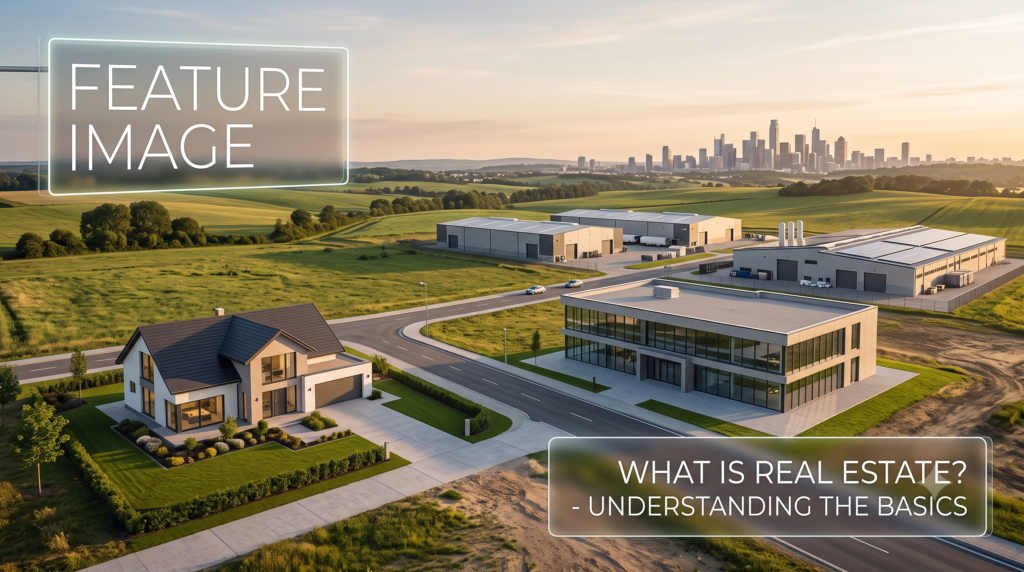
We hear the phrase “real estate” everywhere—from news headlines about housing markets to casual conversations about dream homes and investment portfolios. But beyond the jargon, what actually is real estate?
At its core, real estate is real property consisting of land and the permanent structures or natural resources attached to it.
Here is a simple breakdown of what real estate means, the primary types of properties, and why it plays such a critical role in the economy.
Defining Real Estate: The Core Elements
To understand real estate, it helps to break it down into three basic components:
-
Land: The earth’s surface extending down to the center of the earth and upward into airspace. This includes natural resources like water, trees, and minerals.
-
Improvements: Any permanent human additions to the land, such as houses, office buildings, fences, roads, and sewer systems.
-
Ownership Rights: The legal right to possess, use, enjoy, transfer, or lease the land and its structures.
The 4 Main Types of Real Estate

Real estate generally falls into four primary categories, each serving a distinct function:
1. Residential Real Estate
Properties used for living purposes. This is the most common type people interact with daily.
-
Examples: Single-family homes, apartments, condominiums, townhouses, and duplexes.
2. Commercial Real Estate
Properties used exclusively for business operations or to generate income for the owner.
-
Examples: Shopping centers, office buildings, hotels, retail stores, and medical facilities.
3. Industrial Real Estate
Properties used for manufacturing, production, distribution, and storage.
-
Examples: Warehouses, factories, fulfillment centers, and research facilities.
4. Raw Land & Special Purpose
Unimproved land, agricultural land, or specialized structures that don’t fit into standard commercial definitions.
-
Examples: Farms, ranches, vacant lots, parks, schools, and government buildings.
Why Is Real Estate Important?
Real estate isn’t just about buying a house—it is one of the primary drivers of global economic health.
| Aspect | Why It Matters |
| Economic Indicator | Housing market trends (starts, sales, and prices) directly reflect consumer confidence and economic health. |
| Wealth Building | Real estate historically appreciates over time, serving as a key vehicle for building equity and generational wealth. |
| Passive Income | Rental properties offer cash flow through monthly rent while benefiting from long-term property value growth. |
| Employment | The real estate sector drives job creation in construction, architecture, finance, property management, and legal services. |